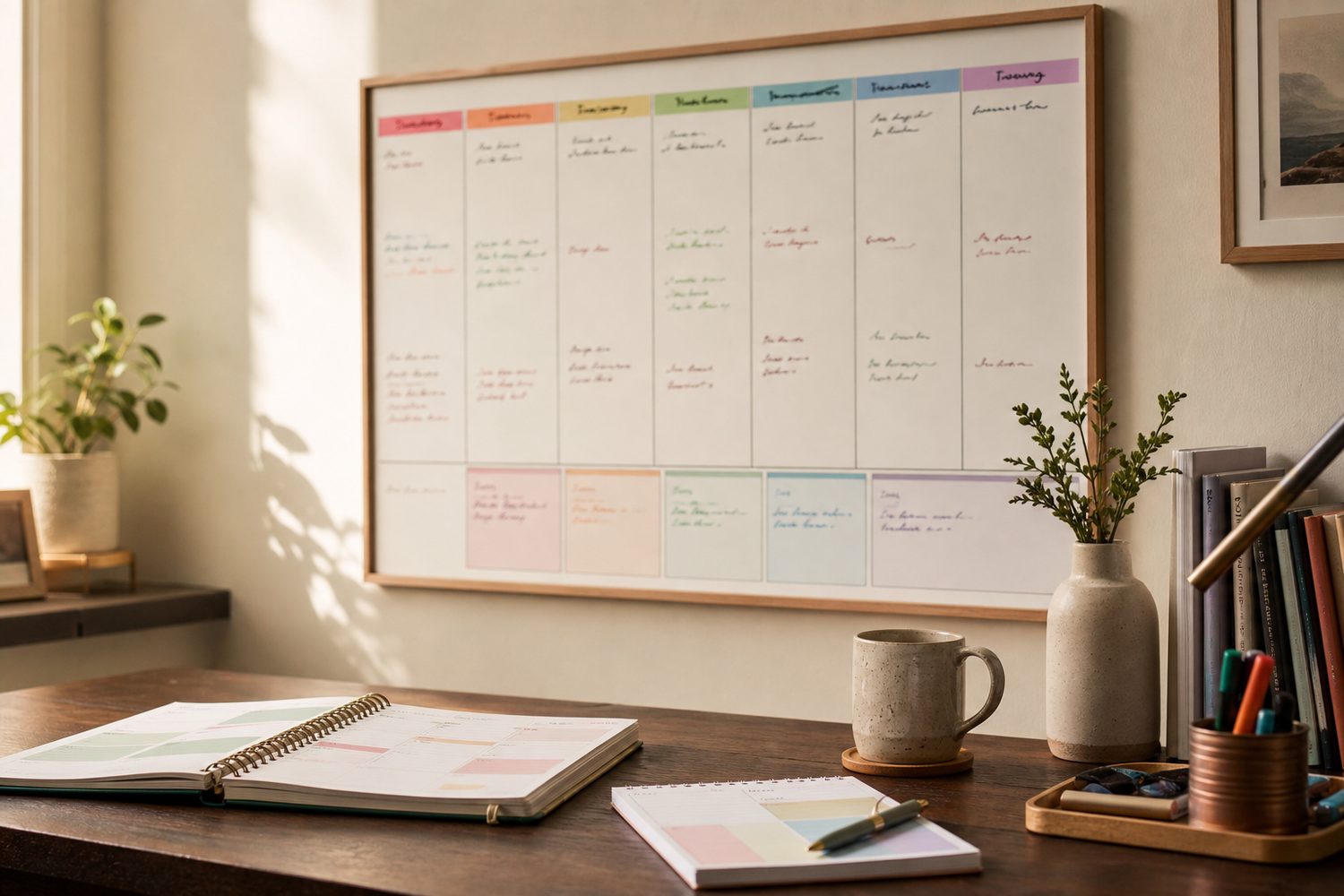
Somewhere in your house there is a drawer with at least three beautiful abandoned planners in it. Each one was going to be the one. Each lasted somewhere between nine days and three weeks, and each now radiates a specific quiet shame every time you see it.
Here is the thing nobody said when you bought them: those planners were designed for brains that remember the planner exists. If you are autistic, ADHD or both, you do not need a prettier notebook. You need planning tools built for how your brain actually works, forgiving of gaps, visible without being opened, and simple enough to run on your worst day.
That is what this roundup is. Real picks, chosen for specific neurodivergent barriers, most of them cheaper than the planners in the drawer.
Heads up: some links below are affiliate links. If you buy through them we may earn a small commission at no extra cost to you. It never changes what we recommend. See our affiliate disclosure for the full picture.
Start with a free planning tool before you spend a penny
Before anything goes in a basket, try our free Manifestation and Action Planner. It lives on the site, costs nothing, and walks you from a goal to a small, honest set of next actions, which is exactly the decision work that paper tools cannot do for you.
Pair it with our free Habit Tracker for the follow through, and you have the thinking half of a planning system before you have spent anything. The physical tools below handle the other half: getting the plan out of your head and into your eyeline, where ND brains actually need it.
How to choose planning tools for an autistic or ADHD brain
Match the tool to your specific failure mode, not to an aesthetic.
If your problem is remembering the system exists, you need wall mounted and always visible. Out of sight is genuinely out of mind, this is working memory, not carelessness, so a planner inside a bag cannot help you. Whiteboards and wall calendars can.
If your problem is abandoned planners and guilt, you need undated and forgiving. A dated planner turns every rough patch into printed evidence against you. Undated pages let you disappear for three weeks and return without waste or shame.
If your problem is overwhelm at the size of the list, you need constrained formats: a pad with room for three priorities, not an hourly grid. The tool should force the shortlist decision, because a 25 item list is not a plan, it is a threat.
If your problem is time blindness, planning and timers are a package deal. We covered visual timers properly in our best focus tools for ADHD roundup, and the executive dysfunction guide covers what to do on the days nothing starts.
And whatever the barrier, plan for the average day, not the best one. A system that only works when you are firing is not a system. It is a trap with nice stationery. The wider approach to designing around your actual brain is in our pillar guide to living life as a neurodivergent adult.
The best planning tools for autistic and ADHD adults in 2026
Clever Fox Undated Planner: best undated planner that forgives missed weeks
The undated format is the single kindest design decision in stationery. Skip a week, a month, an entire season of your life, and the planner simply waits, no wasted pages, no printed dates silently keeping score. The layouts are simple, priority led rather than hourly, with enough structure to prompt the useful decisions and not so much that filling it in becomes its own task. If the drawer of abandoned planners is your origin story, start here.
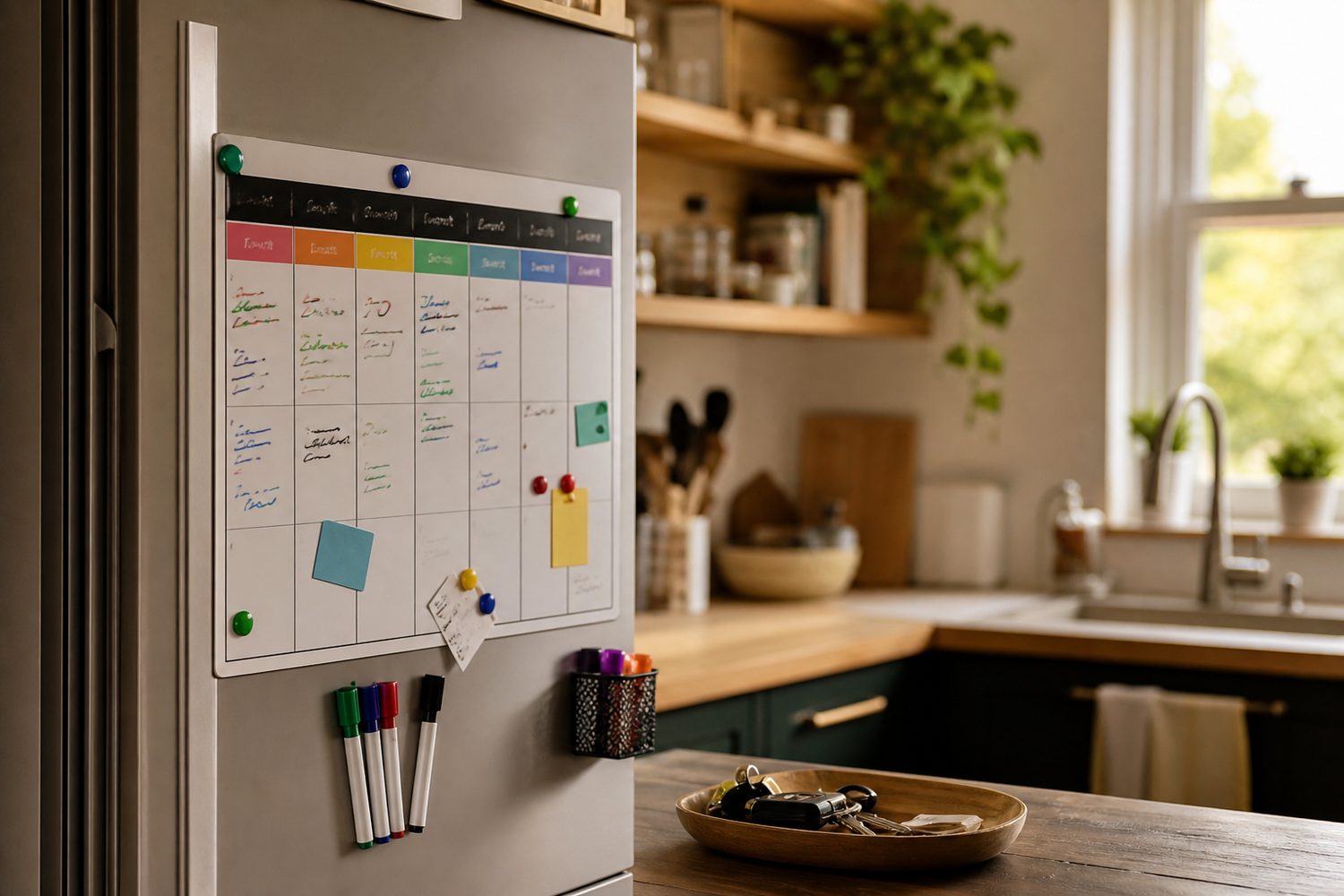
Magnetic Weekly Whiteboard Planner: best always visible family planner
This one goes on the fridge, which is precisely the point: you do not have to remember to check it, because it ambushes you every time you want milk. A week at a glance, wiped clean every Sunday, colour coded markers if multiple humans share the house. For brains where object permanence applies to plans, the fridge whiteboard outperforms every app, because an app has to be opened and the fridge door does not.
The Productivity Planner: best one day at a time planner
One page per day, and the page opens with a single question: what is the most important task? That constraint is the feature. It physically enforces the shortlist decision, your one big thing and a handful of secondaries, and refuses to host the 25 item doom list. Built in time estimates and a pomodoro tally give the day honest edges, and each morning starts on a clean page. For overwhelm prone brains, the daily fresh start is quietly enormous.
Rocketbook Core Reusable Notebook: best capture inbox for a leaky working memory
The golden rule of ND organisation is capture everything, immediately, in one place. The Rocketbook is a strong single inbox: write anything in it, scan the page to the cloud with your phone, wipe it clean and reuse it forever. One notebook that never runs out, never gets lost among seventeen others, and backs itself up. It replaces the note here, napkin there system that working memory keeps dropping.
HAUSPROFI Pomodoro Timer: best visual timer for planning blocks
Planning is half the job; feeling the time inside the plan is the other half. This one is built for exactly the brain that will not use a fiddly timer: preset blocks, flip it to start, a big visible countdown, no menus, no phone, no seventeen notifications riding along. Set it against each priority on the day’s page and the plan stops being theoretical, because time blind brains need the countdown where they can see it, not where they have to remember it.
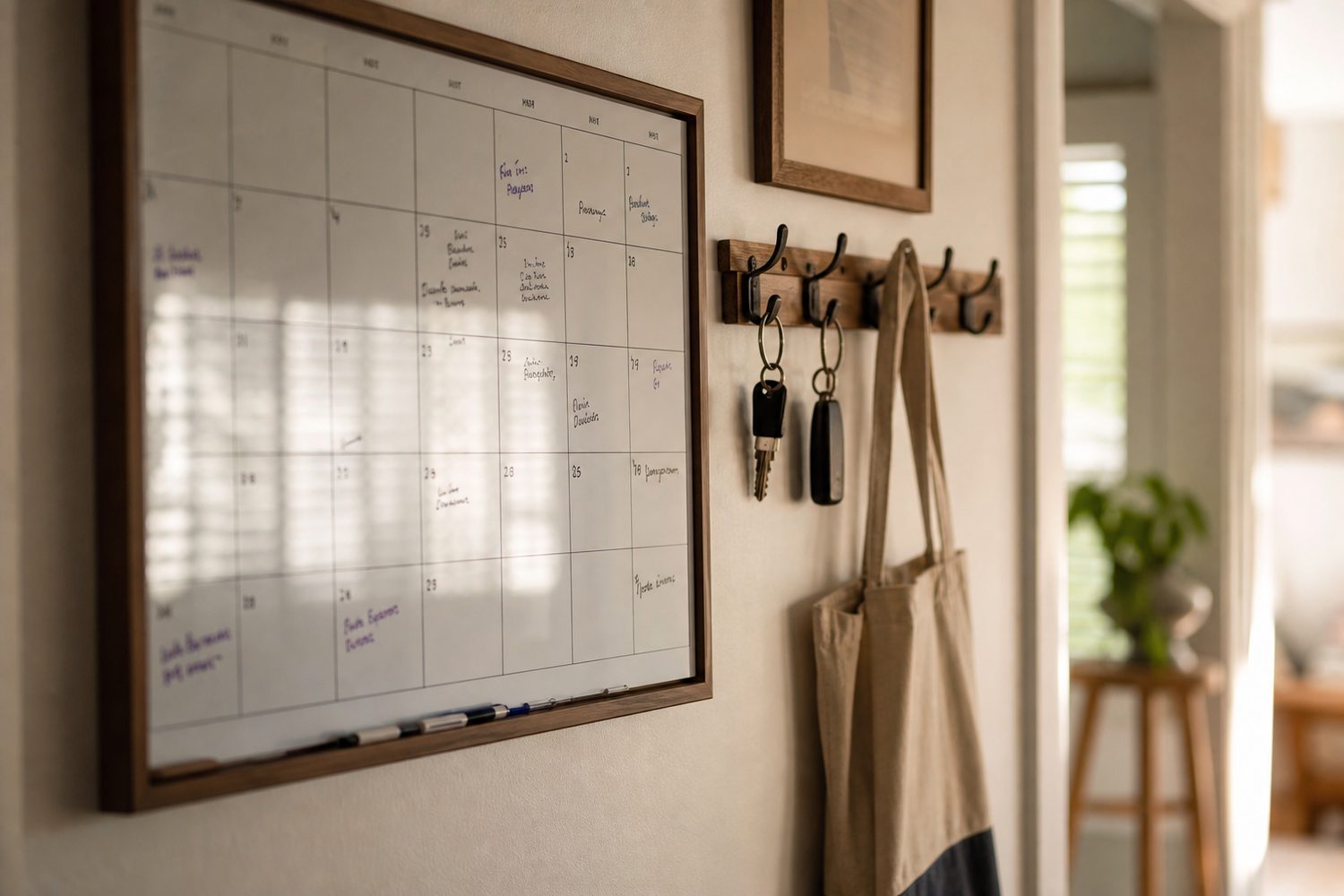
Dry Erase Monthly Wall Calendar: best budget pick, the whole month on one wall
Under fifteen pounds, and it solves the problem no notebook can: seeing the shape of the month at once. Deadlines, appointments, the week that is quietly becoming overloaded, all visible from across the room. Put it somewhere you cannot avoid, the hallway, beside the kettle, and add the one habit of writing things on it the moment they are agreed. Paired with a daily page for today’s priorities, this is a complete planning system on a small budget.
The system, not the stationery
One last honest note, because this is where planning advice usually oversells, and I say it with a hyperfocus receipt: I once spent over fifteen hours in a single day turning a planning spreadsheet into a beautiful dashboard. I was genuinely proud of it. Then I kept forgetting to open it, because that is what happens to my systems that live behind a click. The list on the wall gets seen; the masterpiece in a browser tab does not. None of these tools plan for you. What they do is lower the cost of planning until your brain can afford it: the whiteboard removes the remembering, the undated pages remove the guilt, the one page day removes the overwhelm, the timer removes the time blindness.
Start with one. Genuinely one. The fridge whiteboard if visibility is your gap, the undated planner if shame is. Run it for a fortnight alongside the free Manifestation and Action Planner, and let the system grow only after the first piece has survived contact with a bad week.
A drawer of abandoned planners was never evidence that you cannot plan. It was evidence that nobody was designing for your brain. That part, at least, is now fixed.