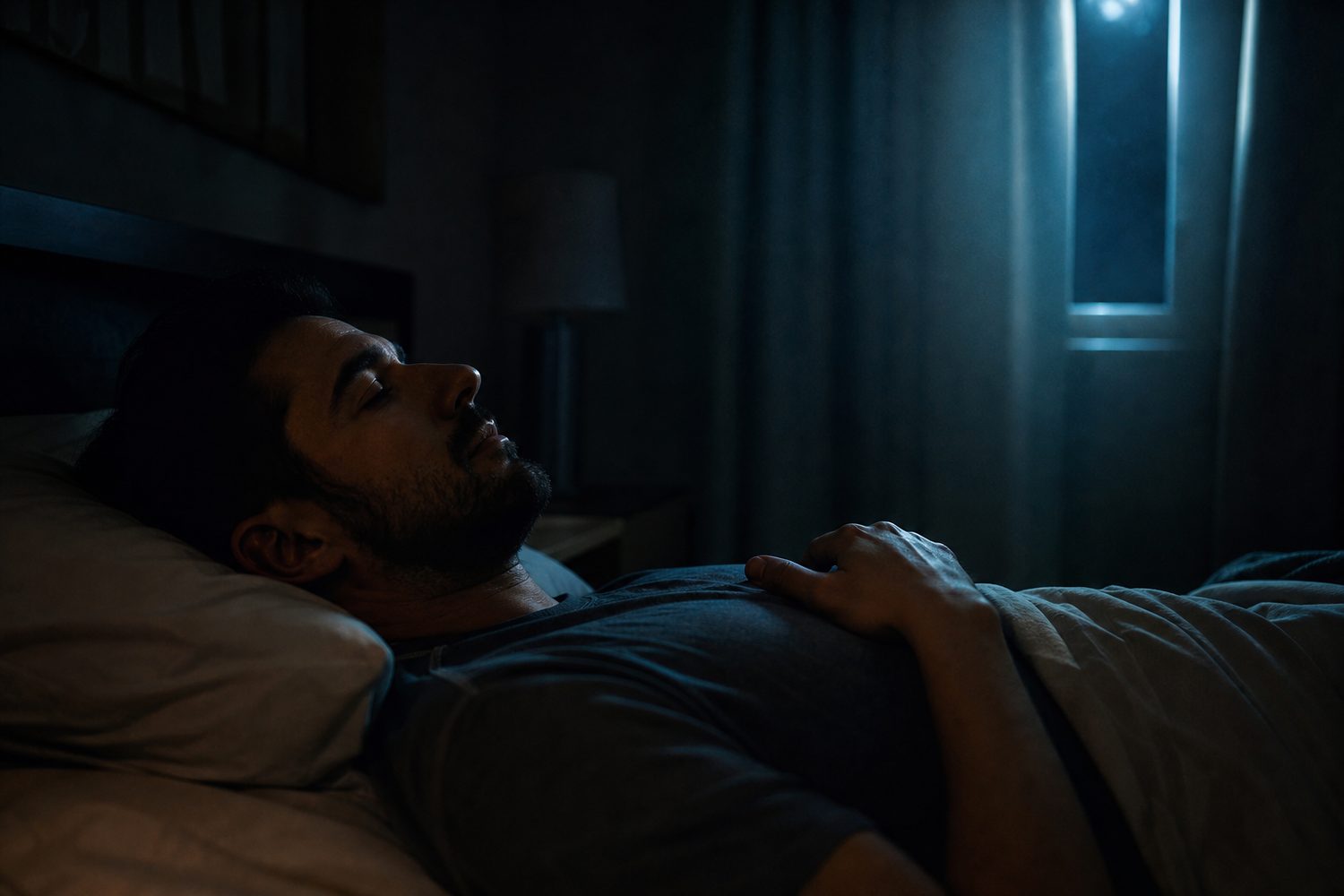
The lights are off. The day is done. And your mind, given its first quiet moment since morning, decides this is the perfect time to reopen the case files.
The conversation from Tuesday, again. The decision from last year, again. The thing you should have said, polished to perfection three years too late. You are not choosing any of this. The loop chose you, and every lap feels weirdly necessary, as if one more replay will finally resolve it.
It will not, and understanding why is the doorway out. This is a guide to using mindfulness, real, specific practices, not vague advice to “be present”, to unhook from rumination at night.
What rumination actually is
Rumination is your mind’s replay function stuck on repeat: chewing over past events, conversations and mistakes, the same material, the same angles, no new conclusions.
The trap is that it impersonates problem solving. It feels diligent, as if you are working on something; psychologists studying rumination describe it as an attempt at control that actually makes solutions harder to reach. But watch it honestly and you will notice the tell: nothing is ever produced. No decision, no plan, no relief, just the loop, and a rising ache. Genuine thinking moves forward. Rumination circles. Your brain keeps the file open because it feels unfinished, and it feels unfinished because circling can never finish anything.
Night is its favourite venue for reasons we covered in the companion piece on the night time inner critic: the day’s distractions fall away, your mental fact checker is exhausted, and quiet hands the microphone to whatever is loudest inside.
Here is the key that unlocks the mindfulness approach: rumination is not a content problem, it is an attention problem. The material does not need solving at 11pm. Your attention needs somewhere else to stand.
Why mindfulness works where arguing fails
You cannot think your way out of a thinking loop. Arguing with the replay, suppressing it, ordering yourself to stop, all of these keep attention on the loop, which is the only fuel it needs.
Mindfulness does something structurally different. Instead of engaging the content, you change your relationship to it: notice the loop is running, acknowledge it without judgement, and gently move attention to something real and present, the breath, the body, sound. Thoughts that do not get attention are like a fire that does not get oxygen. They do not have to be defeated. They just burn down.
One reframe before the practices, because it decides whether you stick with them: your mind will keep drifting back to the loop, and that is not failure, that is the exercise. Every time you notice the drift and return, gently, without the self telling off, you have done one rep. The practice is the returning. Nobody stays.

Five practices, gentlest first
You do not need all five. Try them in order and keep the one or two that fit.
1. Notice and name
The lightest possible touch, and often enough on its own. When you catch the replay running, label it, silently, kindly: “rumination is happening.” Maybe add the flavour: “replaying, again.”
That tiny act moves you from being inside the loop to watching the loop, and the watching position is where all your choices live. Do not add commentary about how you should not be ruminating, that is just the loop hiring a second voice.
2. The long exhale
The body keeps the loop alive: rumination and physical arousal feed each other. So lower the arousal directly. Breathe in for a count of four, out for a count of six to eight, and put your whole attention on the counting and the sensation of the breath leaving.
Two or three minutes is a real dose. The extended exhale activates the calming branch of your nervous system, the same mechanism our breathing exercises for anxiety build on, and the counting gives attention its alternative job.
3. The body scan
The classic night practice, and the strongest for most people. Starting at your toes, move your attention slowly upward through the body, feet, ankles, calves, one region at a time, just noticing whatever is there: warmth, weight, contact with the mattress, nothing at all.
Do not try to relax anything; noticing is the whole job. The scan works because it occupies attention with a task that is real, sequenced and utterly incompatible with replaying Tuesday. Most people never finish one. That is the practice succeeding, not failing.
4. Sound as an anchor
Some brains find breath focus fiddly at night. Sound is a good alternative: let your attention rest on the furthest sound you can hear, then the nearest, then the quietest. No naming, no judging, just listening. When the loop pulls you back, and it will, notice, and return to the furthest sound.
This pairs well with a consistent soft background, rain audio, a fan, because it gives the ear somewhere neutral to stand.
5. Drop the anchor into the day instead
If night after night the same material loops, the kindest fix happens before bed: give the rumination an official appointment. Ten minutes, earlier in the evening, pen and paper. Write what the mind keeps circling, then one honest line: is there an action here, or not?
I have lived the action version of this. I once replayed a big decision for months, the same laps night after night, afraid of choosing wrong. No amount of replaying ever settled it, because the file was never going to close from inside my head. Acting on it closed it in a day, and the quiet that followed taught me more about rumination than any technique: the loop was not asking for more analysis. It was asking for a decision.
If there is an action, write the first step, and the loop loses its excuse. If there is not, write that too: “nothing to do, case closed.” It sounds too simple. But loops run on the feeling of unfinished business, and a written verdict is often exactly the closure the replaying was pretending to look for. The full daytime toolkit for this lives in how to stop overthinking.
Set the stage so the loop starts quieter
The practices work better on a stage that is not rigged against you, and rumination has three reliable accomplices worth evicting.
The pre bed scroll. Twenty minutes of feeds hands your brain a pile of fresh social material, other people’s opinions, achievements and arguments, at exactly the moment your filter is weakest. If your loops are social, comparisons, replayed conversations, the scroll is feeding them directly. Move the phone out of reach and the raw material thins out within a week.
The revenge audit. Lying in bed reviewing the day for what you got wrong is rumination with a diary, and many of us do it as though it were a duty. Replace it deliberately: three things that happened today that you are quietly glad about, however small. This is not toxic positivity, it is balancing the record, and the gratitude practices version of it takes two minutes.
An unwound body. A day’s tension arrives in bed with you, and a tense body keeps the alarm systems half awake. Two or three minutes of slow stretching, a warm shower, or the long exhale breathing from practice two, done before you lie down rather than after the loop starts, lowers the starting temperature of the whole night.
None of these stop rumination on their own. What they do is turn the volume down before the practices even begin, which on plenty of nights is the difference between a loop you unhook from in minutes and one that runs till two.
Building the skill so nights get easier
Mindfulness at midnight is much easier if it is not the only mindfulness you do. Even five daylight minutes a day, breath, a slow walk without headphones, one mindful cup of tea, trains the noticing muscle in easy conditions, so it is there when you reach for it in hard ones. If you are starting from zero, our beginner’s guide to mindfulness meditation keeps it genuinely simple.
Two honest boundaries on all this. If you are stuck in the loop after twenty minutes in bed, get up, keep the lights low, do something dull, and return when the wave has passed, the bed should stay a place for sleeping, not looping. And if rumination is constant, dark in content or tangled with low mood that will not lift, take it to a GP or therapist. These tools help most people. They are not a substitute for support when support is what is needed.
Tonight, keep it to one move. When the case files open, name it, “rumination is happening”, and take your attention down to your feet against the sheets, slowly north from there.
The committee can keep the files. You are going to sleep.